
Anxiety can quietly slip into daily life affecting your thoughts, sleep, relationships, and overall sense of peace. Many people wake up feeling uneasy, overthink small situations, or feel constantly on edge without knowing exactly why. If this sounds familiar, you are not alone. Learning 5 effective techniques to manage anxiety daily can make a meaningful difference in how you feel, function, and relate to yourself and others. With the right understanding and gentle practices, anxiety can be managed, not feared.
What Is 5 Effective Techniques to Manage Anxiety Daily?
5 effective techniques to manage anxiety daily refers to simple, practical strategies you can practice every day to reduce anxious thoughts, calm your nervous system, and regain emotional balance. Anxiety itself is a natural response to stress or perceived danger, but when it becomes constant or overwhelming, it can interfere with daily life.
These techniques do not aim to “eliminate” anxiety completely. Instead, they help you respond to anxiety in a healthier way by grounding your mind, relaxing your body, and creating emotional safety within yourself. When practiced consistently, daily anxiety management techniques can improve focus, sleep, confidence, and emotional resilience.
Causes of 5 Effective Techniques to Manage Anxiety Daily
People often search for 5 effective techniques to manage anxiety daily because anxiety is influenced by multiple factors. Understanding the causes helps you approach healing with compassion rather than self-judgment.
Emotional Causes
- Unresolved emotional pain or past experiences
- Fear of failure, rejection, or uncertainty
- Low self-esteem or constant self-criticism
Psychological Causes
- Overthinking and excessive worry
- Perfectionism
- Negative thinking patterns
Lifestyle Causes
- Lack of sleep
- Excessive screen time or social media exposure
- Poor diet, caffeine, or irregular routines
Situational Causes
- Work pressure or academic stress
- Relationship conflicts
- Major life transitions (career changes, loss, relocation)
Because anxiety is multi-layered, daily techniques work best when they address both the mind and the body.
Common Problems People Face
Many people struggling with anxiety ask similar questions and experience common challenges:
- “Why do I feel anxious even when nothing is wrong?”
- “How can I stop overthinking at night?”
- “Why does my heart race or breathing feel shallow?”
- “Why do I feel tired but unable to relax?”
Some common problems include:
- Difficulty concentrating
- Restlessness or irritability
- Physical symptoms like headaches or tight chest
- Avoiding situations due to fear
- Feeling emotionally overwhelmed
This is why learning 5 effective techniques to manage anxiety daily is so important it gives you tools to respond rather than react.
Solutions & Treatment Options
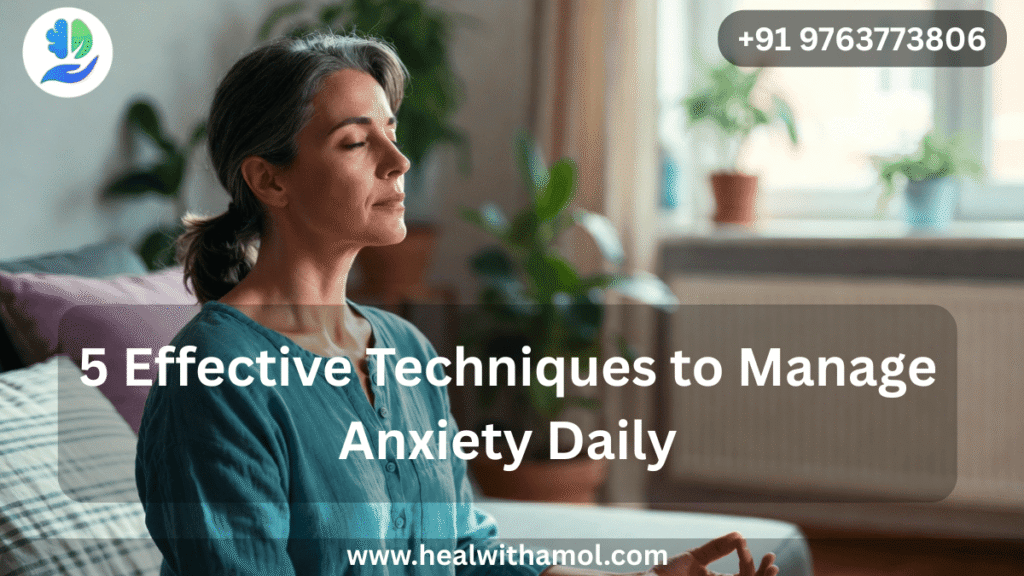
Managing anxiety effectively often requires a combination of self-help strategies and emotional awareness. Below are 5 effective techniques to manage anxiety daily that are practical, gentle, and research-backed.
1. Mindful Breathing Practice
Slow, conscious breathing helps regulate your nervous system. When anxiety rises, your breathing becomes shallow. Reversing this pattern sends a signal of safety to your brain.
How to practice:
- Inhale slowly for 4 seconds
- Hold for 4 seconds
- Exhale for 6 seconds
- Repeat for 5 minutes
This is one of the most effective anxiety management techniques for immediate relief.
2. Thought Awareness and Reframing
Anxiety often comes from unexamined thoughts. Becoming aware of your inner dialogue helps reduce emotional intensity.
Ask yourself:
- Is this thought a fact or a fear?
- What evidence supports or challenges it?
- What would I say to a friend in this situation?
Cognitive awareness is a core part of counseling-based anxiety treatment.
3. Body-Based Relaxation
Anxiety lives in the body as much as the mind. Progressive muscle relaxation or gentle stretching can release stored tension.
Try this daily:
- Tense one muscle group for 5 seconds
- Release slowly
- Move upward through the body
This technique is especially helpful for people who experience physical anxiety symptoms.
4. Structured Daily Routine
Uncertainty fuels anxiety. A predictable routine creates emotional safety.
Include:
- Fixed wake-up and sleep times
- Planned breaks
- Time for movement and rest
Routine-based self-care is one of the most overlooked yet effective techniques to manage anxiety daily.
5. Emotional Expression
Suppressing emotions increases anxiety. Allowing yourself to express feelings—through journaling, talking, or creative outlets reduces internal pressure.
You may also find our article on emotional healing through self-awareness helpful.
Practical Tips for Daily Life
Here are simple actions you can start today:
- Limit caffeine and late-night screen time
- Practice gratitude journaling (3 things daily)
- Take short walks in natural light
- Reduce multitasking
- Practice self-compassion instead of self-criticism
You may also find our article on stress management techniques helpful, especially if work or academic pressure is a trigger.
Consistency matters more than perfection. Even small daily steps build long-term emotional strength.
When to Seek Professional Help
While 5 effective techniques to manage anxiety daily are powerful, some situations require professional support. Consider seeking help if:
- Anxiety persists for weeks or months
- It interferes with work, studies, or relationships
- Panic attacks occur frequently
- You feel emotionally exhausted or hopeless
Counseling provides a safe, confidential space to understand your anxiety deeply and learn personalized coping strategies. You may also find our article on online counseling support helpful.
FAQs
1. Can anxiety be managed without medication?
Yes, many people manage anxiety effectively using therapy, lifestyle changes, and daily coping techniques.
2. How long does it take to see improvement?
With consistent practice, some people notice improvement within a few weeks.
3. Are breathing exercises really effective?
Yes, controlled breathing directly calms the nervous system and reduces anxiety symptoms.
4. Is anxiety a sign of weakness?
No. Anxiety is a natural human response and does not reflect weakness or failure.
5. Should I seek help even if my anxiety feels “mild”?
Yes. Early support can prevent anxiety from becoming overwhelming later.
Conclusion
Anxiety does not define you, and it does not have to control your life. By practicing these 5 effective techniques to manage anxiety daily, you can build emotional resilience, inner calm, and self-trust over time. Healing is not about eliminating anxiety it is about learning to live with greater awareness, balance, and compassion for yourself.
If you feel ready to take the next step toward emotional well-being, gentle professional guidance can make the journey easier and more supportive. Learn more about emotional healing and counseling support at https://healwithamol.com/ 🌿