

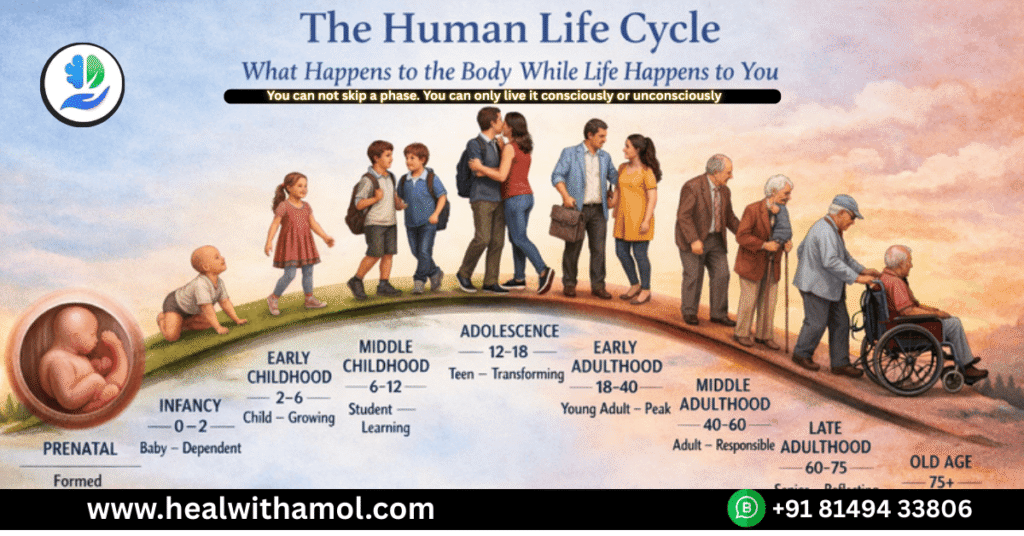
The Human Life Cycle
What Happens to the Body While Life Happens to You
At Heal With Amol, we look at life not as a problem to be fixed, but as a process to be understood. The human body quietly carries every chapter of our emotional story — long before we have language for it, and long after words fall away. This is a compassionate, stage‑by‑stage reflection on how the body lives life alongside us.
PRENATAL STAGE (Before Birth)
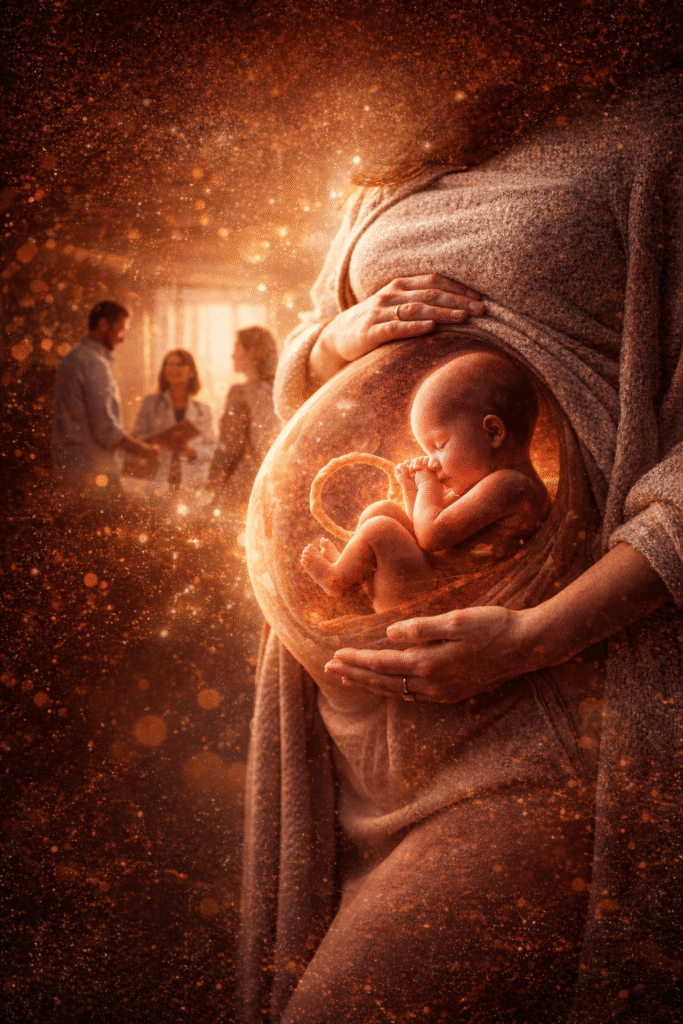
Formed Before You Arrive
Before you are born,
your body already exists.
Your heart beats before you breathe.
Your brain forms before you think.
Your bones grow before you stand.
You live inside another body.
Your first relationship is biological.
You depend on:
- Your mother’s health
- Her stress
- Her nutrition
Before choice,
before identity,
your body learns dependence.
Life begins connected.
Society’s view:
You are celebrated before you arrive.
People ask questions.
They imagine your future.
You are wanted as an idea.
INFANCY (0–2 YEARS)

DEPENDENCE — Baby / Child
You Begin as a Body That Cannot Survive
You come without permission.
You do not choose the time, the place, or the people.
Your body cannot:
- Speak
- Walk
- Sit
- Hold its own head
Your bones are soft.
Your muscles are weak.
Your teeth do not exist.
Your brain is unfinished.
You survive only because:
- Someone feeds you
- Someone holds you
- Someone responds to your cry
Your relationships are survival bonds:
- Mother
- Father
- Caregiver
Before love or meaning, your body asks:
“Will someone keep me alive?”
Trust forms here — or breaks —
long before memory exists.
Society’s view:
You are precious.
Everyone is gentle.
Your crying is forgiven.
Your needs come first.
EARLY CHILDHOOD (2–6 YEARS)

WONDER — Son / Daughter
The Body Learns to Move
Your body strengthens rapidly.
You:
- Walk
- Run
- Climb
- Fall and recover
Baby teeth appear.
Muscles gain control.
Coordination improves.
Your brain explodes with language.
Your emotions spill freely.
Parents are your universe.
Family is safety.
You love easily.
You cry honestly.
You feel without filters.
This is the last stage where:
- Your body heals quickly
- Your heart trusts naturally
- The world feels magical — without effort
Society’s view:
You are cute.
Your mistakes are laughed at.
You are protected from consequences.
The world is patient with you.
MIDDLE CHILDHOOD (6–12 YEARS)

LEARNING & COMPARISON — Student / Friend
The Body Is Measured
Your growth steadies.
Your strength increases.
Your movements become precise.
Baby teeth fall out.
Permanent teeth replace them.
You enter systems:
- School
- Rules
- Schedules
Your relationships expand:
- Friends
- Teachers
- Classmates
For the first time, your body exists beside other bodies.
You notice:
- Who is faster
- Who is smarter
- Who is chosen
Comparison begins.
A quiet question forms:
“Am I enough?”
Society’s view:
You are evaluated.
Grades matter.
Behavior matters.
Love becomes conditional.
ADOLESCENCE (12–18 YEARS)

IDENTITY & REBELLION — Teen / First Love
The Body Changes Faster Than the Mind
Puberty arrives without permission.
Your body:
- Grows rapidly
- Changes shape
- Develops sexual organs
- Produces strong hormones
Voice changes.
Body hair appears.
Acne forms.
Awkwardness increases.
Your body becomes sexual
before your mind understands intimacy.
Relationships shift:
- Parents feel distant
- Friends feel essential
- First crushes appear
You experience:
- First girlfriend / boyfriend
- First rejection
- First heartbreak
Emotions intensify.
Identity fractures and reforms.
You are not broken —
you are becoming separate.
Society’s view:
You are judged but not guided.
Told to behave.
Told to grow up.
Blamed for confusion you didn’t choose
EARLY ADULTHOOD (18–40 YEARS)

PEAK & BECOMING — Partner / Spouse
The Body Cooperates
Your body reaches peak performance.
You have:
- Maximum strength
- Fast recovery
- High energy
- Fully developed brain
Your teeth are strongest.
Your bones are dense.
Your metabolism is efficient.
You build adult relationships:
- Serious partner
- Marriage for many
Love becomes a choice, not an accident.
You take risks.
You believe time is generous.
This stage convinces you:
The body will always obey.
It won’t.
Society’s view:
Support quietly disappears.
No one asks if you are okay.
You are expected to perform.
Your worth becomes productivity.
MIDDLE ADULTHOOD (40–60 YEARS)
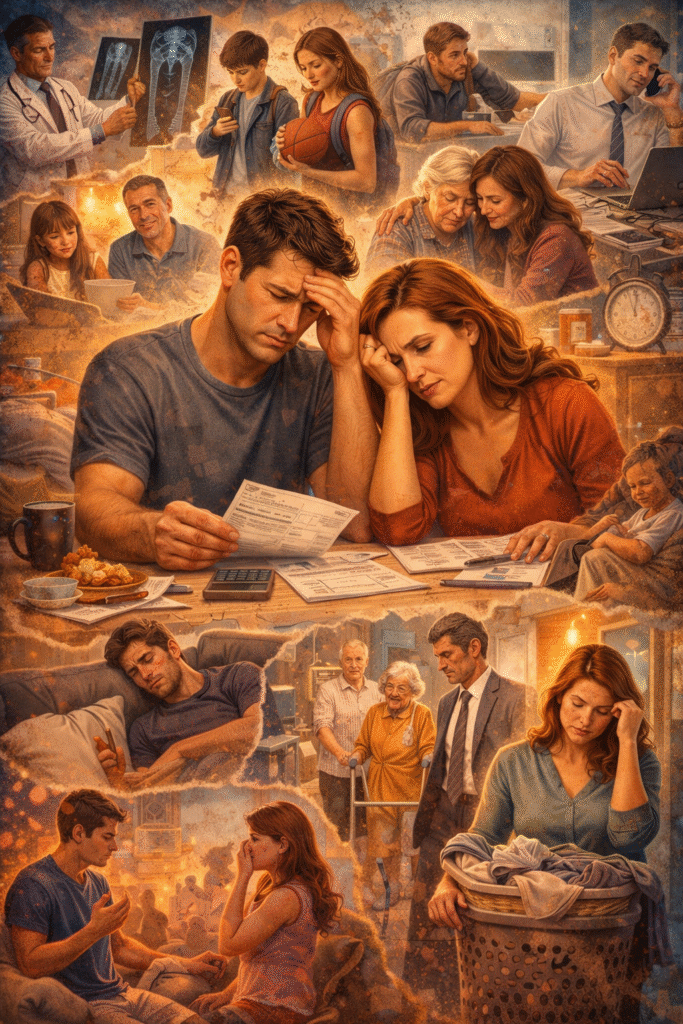
RESPONSIBILITY & REALITY — Parent
The Body Starts Charging You
Your body begins collecting debt.
Metabolism slows.
Fat stays longer.
Recovery takes time.
Sleep becomes necessary, not optional.
Early aging appears:
- Joint stiffness
- Reduced stamina
- Hormonal shifts
You are now:
- A parent
- A provider
- A caretaker
Your relationships reverse:
Others depend on you
the way you once depended on others.
Stress becomes physical.
You don’t stop wanting —
you stop having space.
Endurance is learned here.
Society’s view:
You are useful.
Needed.
Respected only if you provide.
Replaceable if you don’t.
LATE ADULTHOOD (60–75 YEARS)

AWAKENING & ACCEPTANCE — Grandparent
The Body Slows
Muscle mass decreases.
Bones weaken.
Teeth loosen or are lost.
Vision and hearing decline.
Movement becomes careful.
You step back from building
and begin reflecting.
You become:
- A grandparent
- A guide
- A witness
Love softens.
Ego loosens.
You stop proving.
You start understanding.
Society’s view:
You are politely ignored.
Rarely consulted.
Your experience is praised —
then dismissed.
OLD AGE (75+ YEARS)
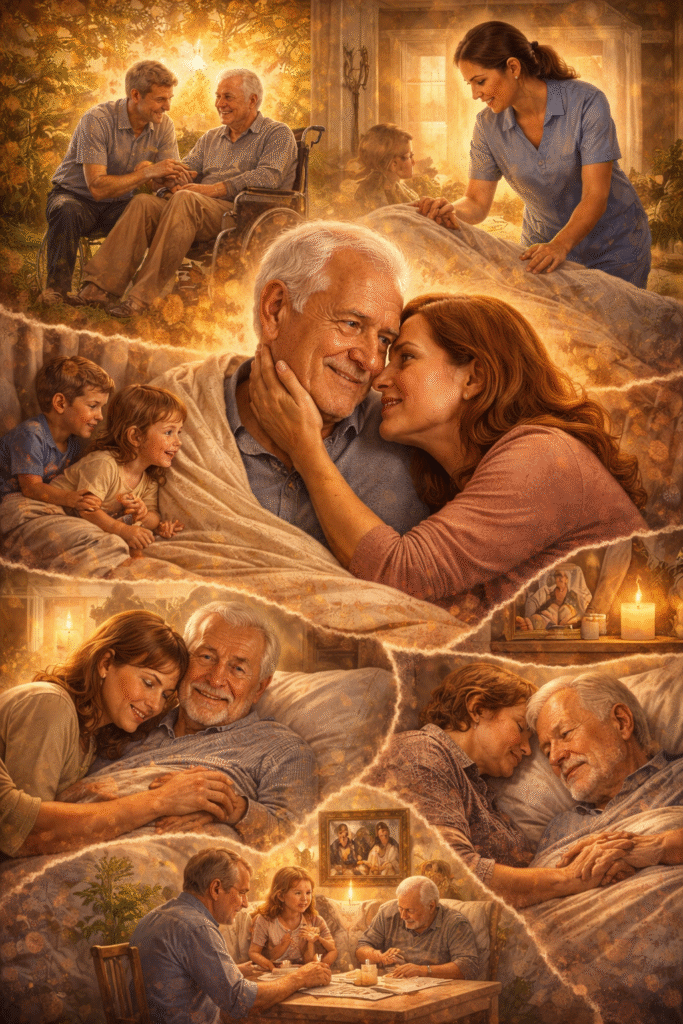
LETTING GO — Elder
The Circle Closes Where It Begins
Strength fades.
Balance weakens.
Memory softens.
Control slips away.
The body that once carried you
now needs to be carried.
Dependence returns.
Relationships simplify:
- Family
- Caregivers
- Presence
You began life being held.
You end life the same way.
What remains is not:
- The body
- The teeth
- The titles
Only impact.
Society’s view:
You become invisible.
Spoken about, not spoken to.
Remembered after you are gone.
SIMPLE AGE MAP (Memorable)
- 0–2: Baby — dependent
- 2–12: Child — growing
- 12–18: Teen — transforming
- 18–40: Young adult — peak
- 40–60: Adult — responsible
- 60–75: Senior — reflecting
- 75+: Elder — releasing
FINAL TRUTH
You spend the first half of life
building a body and identity.
You spend the second half
learning how to release them.
The body teaches every lesson
whether you listen or not.
Society reacts at every stage
whether it is fair or not.
You cannot skip a stage.
But if you do not understand it,
you will live it unconsciously.
At Heal With Amol, healing often begins by understanding where you are in the human journey and offering compassion to the parts of you shaped long before today. Awareness is not about blame. It is about gentleness, responsibility, and choice.