

Somewhere in life, many of us were taught that being strong means staying positive.
No matter what happens, we are expected to smile.
Stay grateful.
Look on the bright side.
If we’re heartbroken, we’re told to “move on.”
If we feel anxious, we’re told to “think happy thoughts.”
If we’re grieving, someone reminds us that “everything happens for a reason.”
On the surface, positivity sounds helpful.
It sounds motivating.
It sounds healthy.
But when positivity is forced, it stops being healing.
It becomes pressure.
And pressure is not the same as emotional strength.
Here is a truth many people are afraid to say out loud:
You cannot positive-think your way out of emotional pain.
The Rise of the “Good Vibes Only” Culture
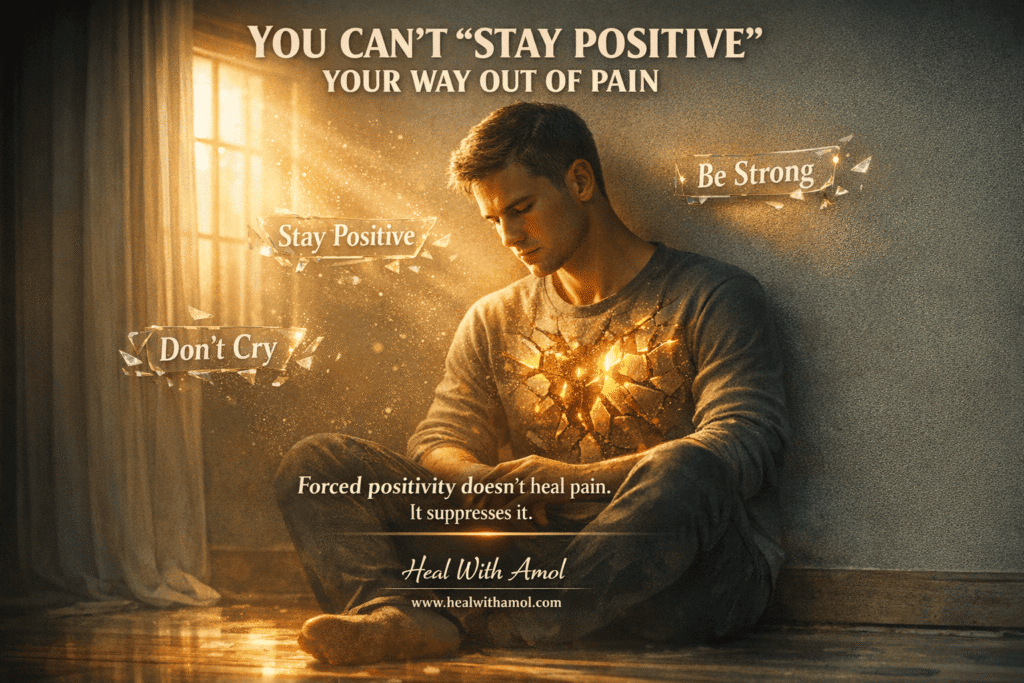
Today, social media is full of motivational quotes, affirmations, and advice to “stay positive.”
While many of these messages mean well, they often oversimplify something very complex.
Emotional pain is not a mindset problem.
It is a human experience.
When someone says, “Just focus on the positive,” what they may really mean is:
“Your pain makes me uncomfortable.”
Instead of sitting with sadness, anger, or fear, we try to cover it up with optimism.
This is where toxic positivity begins.
Toxic positivity is not the same as healthy hope.
Healthy hope says:
“This is hard, and I will heal.”
Toxic positivity says:
“It’s not that bad. I shouldn’t feel this way.”
One allows feelings.
The other suppresses them.
What Happens When You Suppress Emotions
When emotions are ignored, they do not disappear.
They go underground.
You may tell yourself you are fine.
You may even convince others you are fine.
But your body remembers.
Unprocessed emotions often show up as:
- anxiety
- emotional numbness
- anger over small things
- tiredness without reason
- headaches or body pain
- trouble sleeping
Someone who is always “staying positive” may secretly feel empty inside.
Another person may snap at loved ones without knowing why.
This is not weakness.
This is biology.
Your nervous system is designed to feel and release emotions — not hide them.
Why Forced Positivity Feels So Attractive
If forced positivity doesn’t work, why do people cling to it?
Because pain feels scary.
Sitting with heartbreak, disappointment, or shame can feel overwhelming.
Positive thinking feels like an escape.
For a moment, it can lift your mood.
Gratitude and affirmations can help but only when they do not replace emotional honesty.
Imagine placing a beautiful carpet over a broken floor.
It looks fine.
But the foundation is still cracked.
Real emotional strength is not about hiding cracks.
It is about repairing them.
Suppression vs Processing Emotions
There is a big difference between suppressing and processing feelings.
Suppression sounds like:
- “I shouldn’t feel this way.”
- “Others have it worse.”
- “I need to move on.”
- “I must stay positive.”
Processing sounds like:
- “This hurts.”
- “I feel disappointed.”
- “I need time.”
- “It’s okay to feel this.”
That small change in language changes everything.
When you name an emotion, your brain starts to calm down.
Awareness creates space.
Space creates choice.
Instead of reacting from pain, you begin responding with understanding.
You Are Allowed to Feel
Many people feel guilty for their emotions.
They think:
- Sadness means weakness
- Anger means ungratefulness
- Fear means lack of faith
But these are learned beliefs, not truths.
Every emotion has a purpose:
- Sadness helps you process loss
- Anger shows where your boundaries were crossed
- Fear protects you
- Disappointment shows what matters to you
When you deny emotions, you deny important messages from yourself.
Healing begins with permission.
Permission to cry.
Permission to say, “I’m not okay today.”
Permission to admit something hurt.
This is not drama.
This is emotional maturity.
The Body Remembers What the Mind Avoids
Many people seek emotional healing for physical problems first.
They talk about:
- headaches
- stomach issues
- sleepless nights
- racing thoughts
- constant tiredness
Slowly, stories come out.
A breakup that was never grieved.
A childhood wound that was minimized.
A betrayal that was brushed aside.
The mind tries to stay positive.
The body tells the truth.
When emotions are processed safely, people often feel:
- lighter
- calmer
- more connected
- more authentic
Healing is not about being cheerful all the time.
It is about becoming emotionally whole.
Real Positivity Is Honest
Healthy positivity does not silence pain.
It walks beside it.
It says:
- “This hurts, and I will survive it.”
- “I feel overwhelmed, and I am listening to myself.”
- “I can hold sadness and hope together.”
This is emotional resilience.
Resilience does not mean no struggle.
It means staying present with struggle without abandoning yourself.
Forced positivity feels fragile.
Honest positivity feels steady.
How to Start Processing Emotional Pain
If you have spent years avoiding feelings, start gently.
Ask yourself:
- What am I feeling right now?
- Where do I feel it in my body?
Is there tightness in your chest?
A lump in your throat?
A heaviness in your stomach?
Pause.
Breathe.
Notice without judging.
You can try:
- journaling honestly
- talking with someone you trust
- professional counselling
- quiet reflection
Healing does not need to be dramatic.
It needs to be consistent.
Stop Performing Positivity
Many people act positive because they fear rejection.
They think:
“If I show my real emotions, people will leave.”
But relationships built on performance are exhausting.
When you allow yourself to be real, you invite deeper connection.
You give others permission to be real too.
Emotional honesty builds trust.
If someone cannot accept your emotions, that speaks about their capacity — not your value.
Moving Toward Emotional Wholeness
You do not have to choose between positivity and pain.
You can:
- feel heartbreak and still believe in love
- feel fear and still take action
- feel anger and still act with kindness
Wholeness means accepting your full emotional range.
Staying positive at all costs may protect you for a moment.
But it disconnects you from yourself over time.
True healing is not pretending.
It is integrating.
When you allow yourself to feel fully, you become:
- stronger
- calmer
- more grounded
- more honest
And from that place, real positivity grows naturally.
Not forced.
Not performed.
But earned through awareness.
That is the kind of positivity that truly heals.
Exlpore Our new blogs
Why Healing Feels Worse Before It Feels Better
Why Emotional Healing Is Important for Mental Health
The Human Life Cycle: How the Body Learns, Adapts, and Lets Go